
What Is 4-7-8 Breathing?
4-7-8 breathing is a simple, structured breath pattern: you inhale for 4 seconds, hold for 7, and exhale slowly for 8. Popularized by Dr. Andrew Weil and rooted in older pranayama practice, it has become one of the most widely shared techniques for calming the body and drifting off to sleep. No equipment, no app required to learn it, and you can do it in under a minute.
Why It Works
The pattern is not magic, but it does lean on real physiology:
- A long exhale calms the nervous system. When you breathe out for longer than you breathe in, you nudge your body from "fight or flight" (sympathetic) toward "rest and digest" (parasympathetic). The extended 8-second exhale is doing the heavy lifting here.
- The hold steadies your rhythm. Pausing for 7 seconds slows your overall breathing rate and gives carbon dioxide a moment to rise gently, which can deepen the sense of relaxation.
- Counting occupies a busy mind. Following the numbers gives a racing brain something quiet to hold onto, instead of replaying the day or tomorrow's to-do list.
How to Do 4-7-8 Breathing
- Sit or lie down somewhere comfortable. Rest the tip of your tongue just behind your front teeth.
- Exhale completely through your mouth.
- Close your mouth and inhale through your nose for 4 seconds.
- Hold your breath for 7 seconds.
- Exhale slowly through your mouth for 8 seconds, making a soft whoosh.
- That is one cycle. Repeat for four cycles to start.
Keep the ratio, not the exact seconds, if 4-7-8 feels like too much at first. Try 2-3-4 or 3-5-6 and build up. The point is a longer exhale, comfortably.
When to Use It
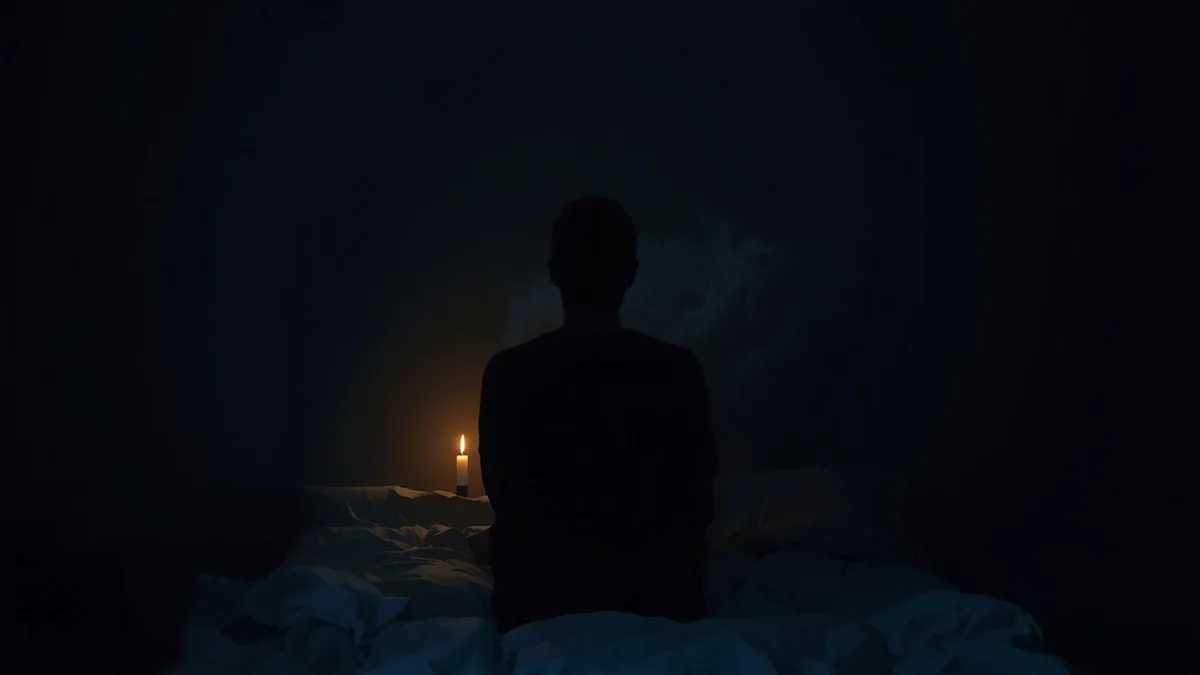
- At bedtime, lying in the dark, to shorten the time it takes to fall asleep.
- If you wake at 3 a.m. and your mind switches on. A few cycles can settle you back down.
- Before a stressful moment: a presentation, a hard conversation, a flight.
- Anytime anxiety spikes and you need a fast, portable reset.
Tips for Beginners
- Breathe from your belly, not your chest. Your stomach should rise on the inhale.
- Start with four cycles. Doing more at first can leave you light-headed.
- Practice twice a day for a week so the pattern becomes automatic. It works best when it is familiar.
- If holding for 7 feels strained, shorten everything but keep the exhale the longest count.
FAQs About 4-7-8 Breathing
-
How long until it works? Many people feel calmer after a single round, but the sleep benefit grows with regular practice over a couple of weeks.
-
Can I do it more than four times? Once you are comfortable, you can build up to eight cycles. Stop if you feel dizzy.
-
Is 4-7-8 breathing safe? For most people, yes. If you have a respiratory condition or feel faint, ease off and check with your doctor.
-
Does it really help with sleep? It will not replace good sleep habits, but as a wind-down cue it is one of the easiest tools to add to your night.
Conclusion
4-7-8 breathing is one of the simplest ways to tell your body the day is over. Pair it with a dark room, a consistent bedtime, and a soft soundscape, and you give yourself the best chance of drifting off without a fight.
In Calmspace, you can follow a guided 4-7-8 session with a gentle visual to pace your breath, then let a sleep sound or a calming mix carry you the rest of the way. Open the app, find your breath, and let the night settle in.
Sleep well.